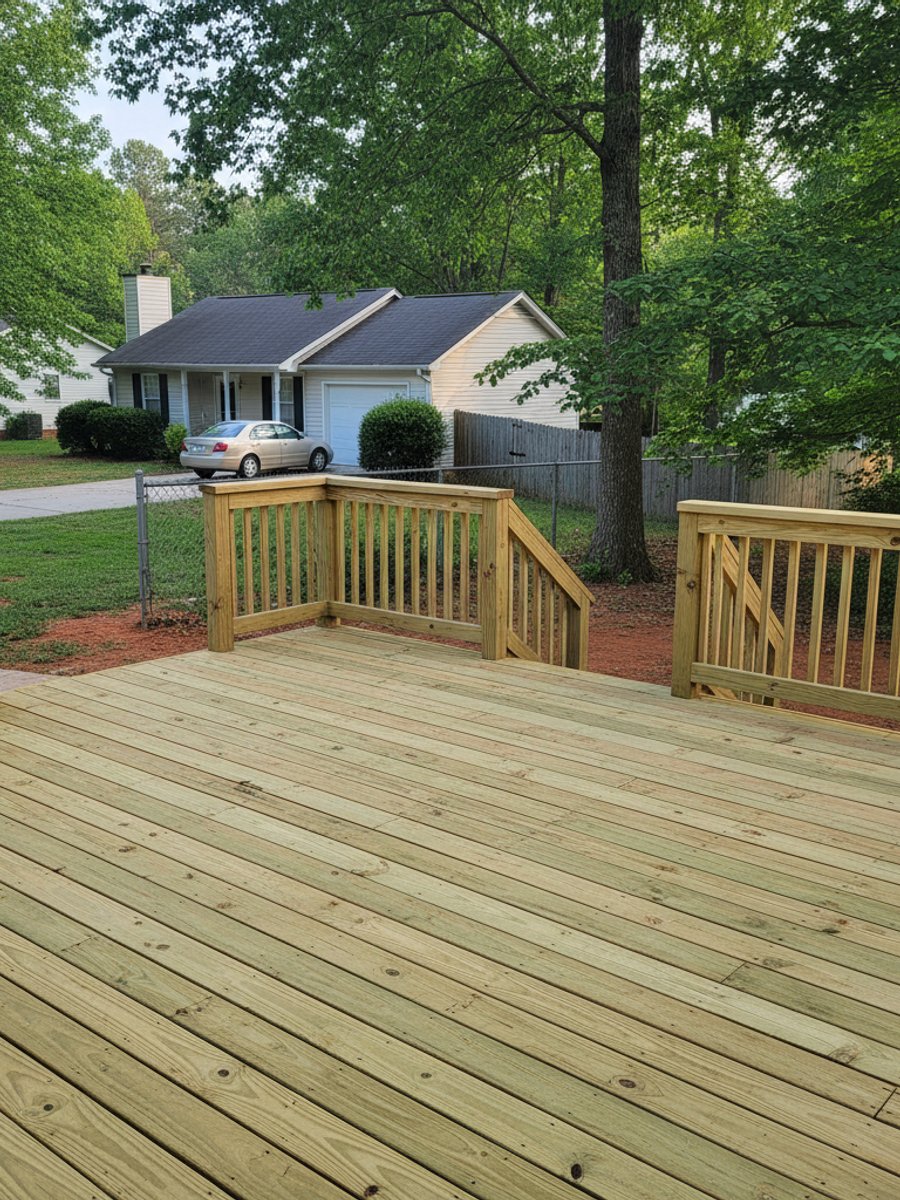
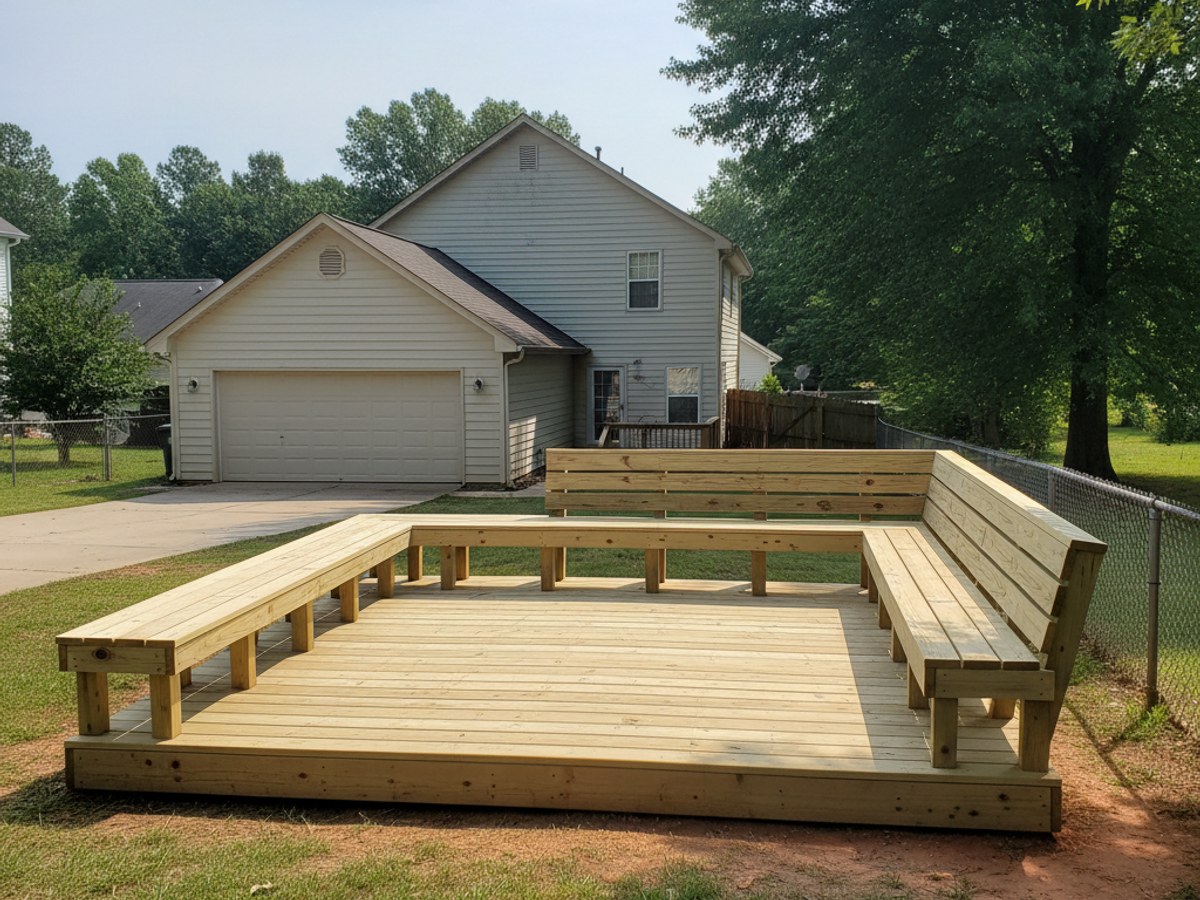
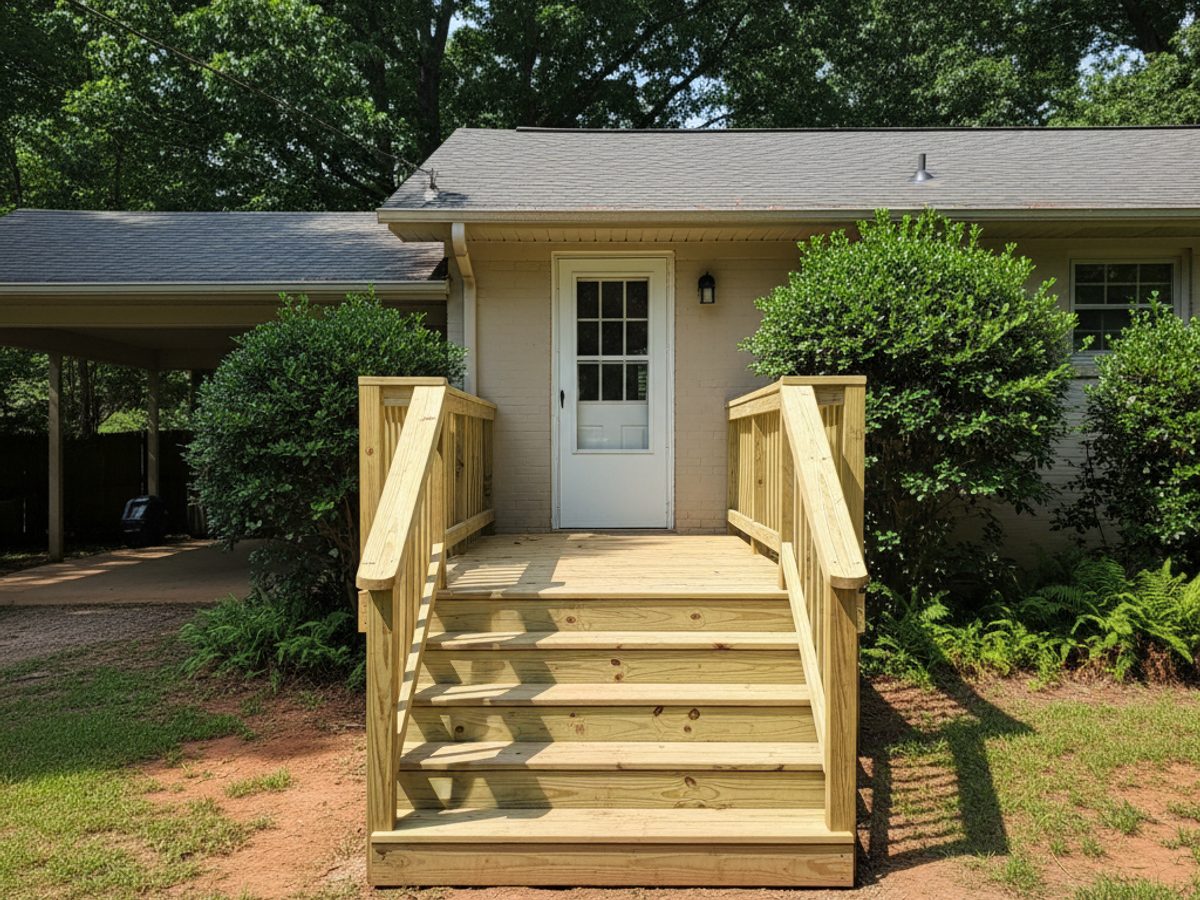
Every job below is one we do ourselves across Dallas.
We frame new decks from the footings up, setting posts below grade and bolting the ledger board to the house rim joist with lag screws and flashing behind it. Joist spacing runs 16 inches on center for standard decking, tighter if you're running composite at an angle. Most single-level decks take about a week from footings to final board.
We'll sketch the layout, figure out where the stairs and rails go, and give you a price before anything gets ordered. Multi-level decks, built-in benches, and pergola-ready framing all get planned on paper first, not decided on site halfway through.
Soft or spongy boards usually mean water's gotten into the end grain, and they get pulled and replaced rather than patched. Wobbly rails almost always trace back to a loose post connection, not the rail itself. We check the ledger board on every repair call, since that's the spot most likely to be rotting quietly under the flashing.
Pressure-treated pine needs a fresh coat of sealer every two to three years or the sun starts pulling moisture out of the wood and it splits. We pressure wash first, let the boards dry for a couple of days, then stain. Skipping the dry time is why a lot of stain jobs peel within a year.
Composite boards like Trex and TimberTech don't need staining and won't splinter, but they still need proper joist spacing underneath, usually 12 inches on center instead of 16. We use hidden fastener systems so you don't see screw heads across the whole deck surface.
Georgia code calls for a 36 inch rail height on decks over 30 inches off the ground, with baluster spacing under 4 inches so a small kid can't slip through. We build and install wood, cable, and aluminum rail systems.
If the frame's solid but the decking surface is cupped, gray, or splintering, we replace boards without touching the joists underneath. This runs a fraction of the cost of a full rebuild.
Stepped decks and decks that wrap a walkout basement need stair stringers, mid-span beams, and extra footings that a single flat deck doesn't. We engineer the load path before we cut the first post.
We frame screened porches off the back of a deck or as a standalone structure, with a roof tied into the house framing and screen panels that come out for cleaning. This is a popular add-on once people realize how many bugs Georgia has in July.
Old decks come down board by board so we can check the ledger and framing for reuse before deciding what actually needs replacing. We haul off everything, treated lumber can't just go in a regular burn pile.
Four steps, and no surprises in any of them.
You tell us what you want doing, we look at what is actually there, and we ask the awkward questions early.
In writing, itemised, free. If something might add cost later we flag it now rather than at the end.
Same crew throughout. We cover your floors, keep the dust down and tidy up before we leave each day.
You point out anything you are not happy with and we fix it before the invoice, not after.
Built and repaired within about 50 miles of Dallas, GA.
What tends to come up once a deck project is actually underway.
Describe the problem and we will tell you what it probably is. No obligation.